Cosmetic Dentistry


Cosmetic Dentistry

At the office of Timberbrook Dental, we take a deliberate approach to restoring teeth that are weakened, damaged, or cosmetically compromised. Ceramic crowns are a modern, metal-free solution that lets us rebuild a tooth’s strength while preserving a natural appearance. Advances in dental ceramics and digital workflows mean crowns can be both long-lasting and visually seamless with the rest of your smile.
This page explains what ceramic crowns do, how they differ from older crown types, and what to expect from treatment. Our goal is to give clear, practical information so you can make an informed choice with your dental team.
A crown acts like a protective cap for a tooth. When a tooth has lost a significant portion of its structure because of decay, fracture, or previous large restorations, a simple filling may not provide enough support. A full-coverage crown surrounds the remaining tooth and redistributes biting forces, reducing the risk of further damage.
Crowns are commonly recommended after root canal therapy because treated teeth can become brittle over time. They are also used to protect teeth that suffer from heavy wear due to grinding or clenching, and to restore teeth that have fractured or are too compromised for a standard filling.
Beyond protection, a well-designed crown restores proper chewing function and helps maintain the correct bite relationship with adjacent and opposing teeth. This functional restoration supports long-term oral health by preventing uneven wear and minimizing strain on neighboring teeth and the jaw joint.
Significant decay or structural loss that undermines a filling
Fractured or cracked teeth that need full-coverage protection
Restoring a dental implant or anchoring a traditional bridge
Teeth that have undergone root canal therapy and require reinforcement
Improving the size, shape, or color of a single tooth for cosmetic reasons

Today’s ceramic materials are engineered for both beauty and resilience. Unlike traditional crowns that rely on a metal substructure, all-ceramic crowns are metal-free and designed to mimic the translucency and texture of natural enamel. That optical match makes them especially attractive for visible front teeth.
All-ceramic crowns are also biocompatible and gentle on the surrounding gum tissue. Because there’s no metal margin, they avoid the dark line that can appear at the gumline with some older crown designs. Many modern ceramics are also highly resistant to staining and wear.
Another benefit is conservative tooth preparation in many cases: certain ceramic systems allow for thinner restorations, which means less healthy tooth structure needs to be removed. When combined with precise digital impressions and lab workflows, ceramic crowns can offer excellent fit and predictable outcomes.
Not all ceramics are identical. Different ceramic materials have distinct strengths, translucencies, and indications. The ideal choice depends on the tooth’s location, the amount of biting force it will endure, and the cosmetic demands of the case. Your dentist will weigh these factors and recommend the most suitable option.
Lithium disilicate ceramics offer a strong, esthetic solution for many anterior and premolar crowns because they balance translucency and durability. Monolithic zirconia provides exceptional strength for molars where chewing forces are greatest, and high-translucency zirconias are used when a softer optical appearance is desired.
Some restorations combine layered ceramics for enhanced esthetics over a stronger core, while others use a single, uniformly milled material for durability. The decision is clinical: our priority is selecting a material that meets both functional needs and your aesthetic expectations.
Lithium Disilicate — excellent esthetics and good strength for front and premolar teeth
Leucite-reinforced porcelain — traditionally chosen for superior color-matching in low-stress areas
Monolithic zirconia — highly durable, suited for back teeth and heavy bite forces
High-translucent zirconia — improved translucency for cases requiring both strength and a natural look
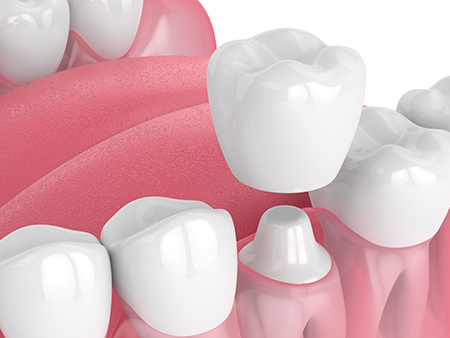
Treatment with a ceramic crown usually follows a clear sequence. The tooth is first evaluated and any decay or old filling material is removed. The remaining tooth is shaped to create a stable platform for the crown. Modern digital scans or traditional impressions capture the exact contours needed for a precise fit.
While a laboratory fabricates the final crown, a temporary restoration protects the prepared tooth and lets you function comfortably. When the final crown returns from the lab (or is milled in-office), the dentist checks fit, color, and bite before permanently bonding or cementing it in place. Minor adjustments ensure a comfortable, natural feel.
After placement, the team will review how to care for the restoration, including cleaning techniques and habits to avoid (such as chewing very hard objects). With appropriate care and routine dental checkups, ceramic crowns can provide many years of reliable service.

We combine careful diagnosis with contemporary materials and laboratory partnerships to achieve predictable results. Treatment planning considers how a crown will interact with surrounding teeth, your bite, and your smile line so the final restoration looks integrated and functions smoothly.
Dr. Parita Patel and the clinical team emphasize clear communication: we review options, explain why a particular material is recommended, and outline the steps involved so you know what to expect. Technology such as digital scanning and computer-aided design improves accuracy and often shortens treatment times.
Our focus is on durable, natural-looking outcomes that respect your individual goals. Whether the priority is strength, aesthetics, or a balance of both, we tailor each plan to the tooth’s needs and your preferences so the final restoration feels like part of your smile.
Ceramic crowns are a versatile, tooth-preserving way to restore form, function, and appearance. Modern ceramic options let us match the look of natural enamel while offering the durability required for everyday use. Choosing the right material and a careful, individualized treatment plan are the keys to a successful long-term result.
If you’re considering a crown or want to learn which ceramic option best suits your situation, our team can walk you through the process and answer any questions. We aim to provide clear information so you can make the best decision for your oral health and smile goals.
Contact us for more information or to discuss whether a ceramic crown is the right solution for your needs.
A ceramic crown is a metal-free restoration designed to cover and protect a weakened or damaged tooth while closely matching the look of natural enamel. Unlike porcelain-fused-to-metal crowns, all-ceramic crowns lack a metal substructure, which preserves translucency and eliminates the risk of a dark margin at the gumline. Advances in dental ceramics produce materials that combine esthetic qualities with sufficient strength for many clinical situations.
The absence of metal also makes ceramic crowns highly biocompatible with surrounding gum tissue, reducing the chance of gum discoloration or irritation. Different ceramic systems vary in translucency and toughness, so the choice of material affects both appearance and clinical performance. Your dentist will recommend the best type based on where the tooth sits in your mouth and how it will be used during chewing.
Ceramic crowns are typically recommended when a tooth has lost a substantial amount of structure and a filling would not provide adequate support. Situations that commonly call for a crown include large decay, fractures, teeth that have undergone root canal therapy, and teeth with extensive wear from grinding or clenching. A crown redistributes biting forces and provides full-coverage protection to reduce the risk of further damage.
Crowns are also chosen for cosmetic reasons when a single tooth requires improvement in shape, size, or color that veneers or fillings cannot reliably achieve. The decision to place a crown depends on clinical factors such as remaining tooth structure, bite dynamics, and the long-term prognosis of the tooth. Your dentist will review alternatives and explain why a crown may offer the most predictable outcome.
Common ceramic materials include lithium disilicate, leucite-reinforced porcelain, monolithic zirconia, and high-translucency zirconia, each with distinct properties. Lithium disilicate is valued for its balance of esthetics and strength for front and premolar teeth, while monolithic zirconia provides superior durability for back teeth subject to heavy chewing forces. Some restorations use layered ceramics to enhance surface characterization over a stronger core, and others use a single uniform material for maximum durability.
The ideal material is selected based on tooth location, the amount of biting force it must withstand, and the esthetic demands of the case. Factors such as how much natural tooth remains, occlusion, and whether the restoration will be placed on an implant or natural tooth influence the recommendation. Your dentist will explain the trade-offs so you understand why a specific ceramic system is the best fit for your needs.
Treatment usually begins with a comprehensive evaluation, removal of decay or old restorative material, and shaping the tooth to form a stable foundation for the crown. Once the tooth is prepared, the team captures precise dimensions using digital scans or traditional impressions and places a temporary crown to protect the tooth while the final restoration is made. Laboratory fabrication or in-office milling creates the final crown to match the prescribed contours and shade.
At a follow-up appointment the dentist checks the fit, occlusion, and color before bonding or cementing the crown permanently and making any necessary adjustments. Modern CAD/CAM workflows and digital communication with dental laboratories often improve fit and shorten turnaround times. The office of Timberbrook Dental incorporates these technologies and careful planning to help ensure predictable, well-fitting results.
Most patients receive local anesthesia during crown preparation, which numbs the area and minimizes discomfort during the procedure. For individuals with dental anxiety or complex cases, additional sedation options may be available to increase comfort, and your dentist can discuss these choices with you prior to treatment. Because the goal is to make the appointment comfortable, the clinical team adjusts anesthesia and support based on each patient's needs.
After the procedure some soreness or sensitivity around the treated tooth and surrounding gum tissue is normal and typically subsides within a few days to a couple of weeks. Over-the-counter pain relievers and gentle care of the area usually manage this short-term discomfort. If you experience persistent or severe pain, prolonged swelling, or signs of infection, contact your dental team promptly for evaluation.
Maintaining excellent oral hygiene is essential for the longevity of any crown: brush twice daily with a fluoride toothpaste, floss carefully along the margin, and use interdental cleaners if recommended. Cleaning plaque from around the crown prevents recurrent decay at the crown-tooth junction and helps protect the supporting gum and bone. Avoiding habits that place excessive force on the restoration, such as chewing ice or opening packages with your teeth, reduces the risk of chipping or fracture.
Regular dental checkups and professional cleanings allow your dentist to monitor the crown, check the bite, and address minor issues before they worsen. If you grind or clench your teeth, wearing a custom nightguard can significantly reduce stress on the crown and adjacent teeth. Promptly report any looseness, roughness, or persistent sensitivity so the team can evaluate whether adjustment or repair is needed.
The lifespan of a ceramic crown varies but many restorations function well for many years when properly designed and cared for. Factors that influence longevity include the chosen material, the amount of natural tooth structure remaining, oral hygiene, bite forces, and parafunctional habits like bruxism. A well-fitting crown placed on a healthy tooth with good maintenance can often last a decade or more, while neglect or heavy stress may shorten that timeframe.
Routine dental visits allow your clinician to detect early signs of wear, marginal breakdown, or decay beneath a crown so corrective steps can be taken before major failure occurs. Timely attention to minor issues, occlusal adjustments, and protective measures such as nightguards help extend a crown's service life. If a crown eventually needs replacement due to fracture, recurrent decay, or aesthetic change, your dentist will discuss the most appropriate next steps.
Ceramic crowns are commonly used both as single-tooth restorations on implants and as components of fixed dental bridges, with technical differences in how they are attached. Implant crowns are designed to connect to an abutment and often require attention to screw access, cementation choice, and occlusal load distribution. When used in a bridge, crowns must be planned to evenly distribute forces across the supporting teeth or implants to maintain stability and longevity.
The selection of ceramic material for implant or bridge work considers chewing forces, esthetic needs, and the relationship between opposing teeth. Communication between the dentist, laboratory, and patient about shade, translucency, and contour is essential to achieve a natural appearance and proper function. Pre-prosthetic planning, accurate impressions or scans, and high-quality laboratory work all contribute to a predictable outcome with implant and bridge restorations.
Teeth grinding and clenching create elevated forces that can increase the risk of chipping, cracking, or premature wear of ceramic crowns. For patients with bruxism, stronger monolithic ceramics such as high-strength zirconia are often preferred in posterior regions because they offer greater resistance to fracture. At the same time, protective strategies like occlusal adjustment and fabrication of a custom nightguard are critical components of a treatment plan for grinders.
In some cases the dentist may recommend alternative restorative approaches or modified designs to reduce stress on the crown while preserving esthetics where needed. Addressing underlying contributors to grinding, such as sleep issues or stress-related habits, can also improve long-term outcomes. A comprehensive evaluation helps tailor materials and preventative measures to each patient's functional needs.
Timberbrook Dental combines detailed diagnosis, digital planning, and laboratory collaboration to create crowns that blend with your smile and function comfortably. Digital scanning and CAD/CAM workflows improve fit and reduce remakes, while skilled shade selection and laboratory communication help match translucency and surface texture. The clinical team evaluates bite relationships and adjacent tooth contours to integrate the restoration into the overall occlusion and smile line.
Dr. Parita Patel and the clinical staff emphasize clear communication so patients understand material choices and expected outcomes before treatment begins. Follow-up visits allow for fine-tuning and monitoring of the restoration to ensure comfort and performance. When placing a crown, the practice focuses on achieving a durable, natural-looking result that respects each patient's goals and oral health needs.
Quick Links
Contact Us
