Restorative Care


Restorative Care

Losing a tooth changes more than your smile — it alters how you chew, speak, and even how your face looks over time. Modern dental implants are designed to replace missing teeth in a way that preserves oral function and restores a natural appearance. Implants act like artificial tooth roots, anchoring crowns, bridges, or full-arch restorations so patients can eat, speak, and smile with confidence.
Implant treatment is a well-established approach that blends surgical precision with restorative planning. Every treatment begins with a careful assessment of oral health, jaw structure, and the patient’s goals. This planning stage ensures implants are placed in locations that support long-term stability and a comfortable bite.
The process is personalized: some patients need a single implant to replace an isolated tooth, while others benefit from multiple implants to support bridges or non-removable full-arch restorations. Whatever the scope, the objective remains the same — rebuild a functional, durable smile that looks and feels natural. The office of Timberbrook Dental follows contemporary protocols to deliver implant care that prioritizes comfort, function, and aesthetics.

Unlike removable options, implants integrate with the jawbone to create a stable foundation similar to natural tooth roots. This stability supports a prosthetic tooth and transfers biting forces into the jaw, which helps maintain bone volume and facial structure. For many patients, this biologic integration is the key difference between implants and other replacement methods.
When planned and placed correctly, implants allow restorations to function like natural teeth — enabling comfortable chewing, clear speech, and predictable oral hygiene routines. They also remove the need to alter adjacent healthy teeth, which is a common drawback of traditional fixed bridges.
Dental implants offer several practical and biologic benefits. Because they are anchored into bone, they provide exceptional retention that eliminates worries about slippage or adhesives. This secure fit translates into a natural-feeling bite and fewer dietary limitations compared with removable dentures.
Implants also help preserve bone. When a tooth is lost, the nearby bone no longer receives the same stimulation and can begin to resorb over time. An implant replaces that stimulation and helps maintain the underlying bone and soft tissue contours, which supports both oral health and facial appearance.
Durability is another advantage: with conscientious oral hygiene and routine dental care, implants can perform reliably for many years. Their materials and design resist decay in the way natural tooth roots cannot, although the overlying restorations (crowns or bridges) still require regular maintenance.
Patients commonly report improved stability when eating and speaking after implant treatment. Because implants are fixed in the jaw, they remove the functional compromises associated with removable prostheses. This makes social and professional interactions more comfortable and reduces the daily management required for removable replacements.
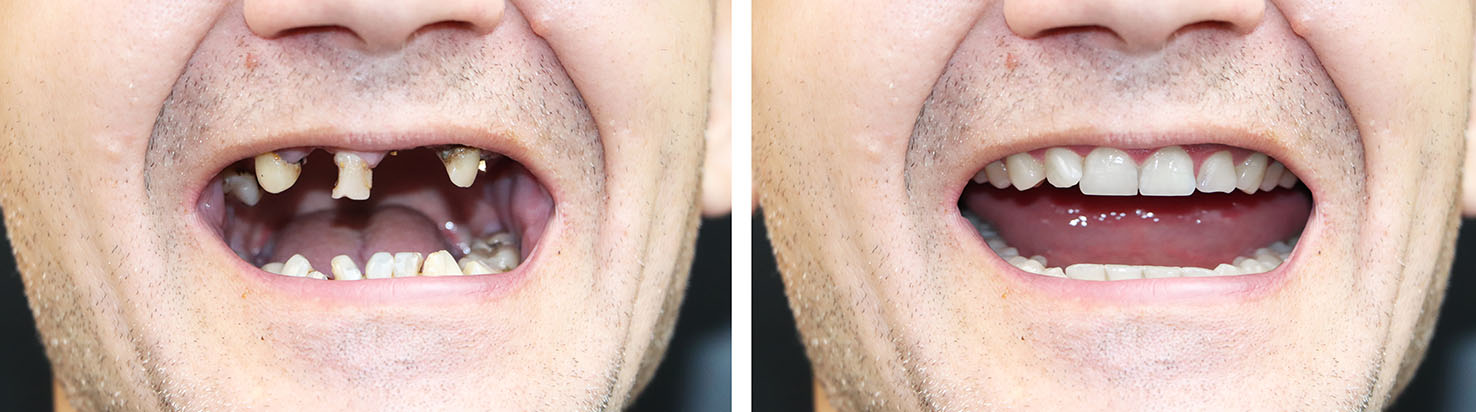
For a single missing tooth, an implant topped with a crown restores the tooth without touching neighboring teeth. This approach preserves surrounding enamel and provides a self-supporting replacement that looks and functions like a natural tooth. The crown is custom-matched to blend with the adjacent dentition for a seamless result.
When two or more teeth are missing, implant-supported bridges can replace the gap without preparing healthy teeth on either side. Strategically placed implants serve as pillars for a fixed bridge, maintaining bone and facial structure while restoring chewing efficiency and smile continuity.
Patients missing most or all of their teeth have contemporary options that go beyond conventional dentures. Full-arch solutions supported by four or six implants can deliver a permanent, non-removable set of teeth that feel and function like natural dentition. These restorations eliminate many of the limitations of traditional dentures and often allow immediate placement of a temporary prosthesis during healing.
For those who prefer a removable option, implant-retained overdentures attach to a few implants and offer improved stability and retention. This hybrid approach combines the simplicity of a denture with the anchorage benefits of implants, improving comfort and function while remaining removable for cleaning.
Successful implant care begins with a comprehensive evaluation that considers medical and dental history, bone volume, gum health, and aesthetic goals. Imaging and digital tools help the clinical team map ideal implant positions and design a restoration that supports a balanced bite and natural appearance.
Placement typically takes place in a controlled outpatient setting. The surgical phase is planned to minimize discomfort and promote predictable healing. For many patients, the procedure is well tolerated and framed with clear pre- and post-operative instructions to support a smooth recovery.
After placement, implants require a period of time to integrate with the bone — a process called osseointegration. During this phase, temporary restorations may be used to protect the surgical site and maintain aesthetics. Once the implant has fully integrated, definitive crowns, bridges, or full-arch prostheses are fabricated to match the patient’s bite and smile goals.
Throughout treatment, clear communication is essential. We discuss options for anesthesia or sedation when appropriate, outline what to expect during recovery, and provide guidance on care to support optimal healing. The goal is a predictable outcome that restores function and confidence.
Long-term success with implants depends on routine maintenance and good oral hygiene. Regular dental visits allow clinicians to monitor soft tissue health, check for any mechanical issues with restorations, and ensure surrounding teeth remain healthy. Proactive care helps protect the investment in oral function and appearance that implants provide.
While implants themselves are not susceptible to decay, the gums and surrounding bone can be affected by periodontal disease. Patients are taught how to keep implant-supported restorations clean and are scheduled for periodic professional evaluations to address minor concerns before they become significant.
Not every patient has the same bone volume needed for implant placement. When bone has been lost due to extraction, disease, or long-standing tooth absence, bone grafting can rebuild a stable foundation for implants. Grafting techniques and materials provide predictable ways to restore the width and height of the ridge so implants can be placed in proper alignment.
In some cases, additional soft-tissue management or sinus-lift procedures are recommended to create the best environment for a long-lasting implant. These preparatory steps are chosen to maximize implant stability and to support natural-looking soft tissue contours around the final restoration.
Deciding on implant therapy is a personal process that balances clinical needs, aesthetic goals, and lifestyle considerations. Dr. Parita Patel and the clinical team take time to explain each option and build a treatment plan tailored to each patient’s situation. That collaborative approach helps ensure predictable outcomes and a positive experience throughout care.
If you’re exploring ways to replace missing teeth and restore oral function, an implant consultation is the best way to understand the options available to you. A focused evaluation will clarify whether implants are a good fit and outline the steps needed to achieve a stable, natural-looking result.
The office of Timberbrook Dental welcomes questions and will explain implant solutions in plain language so you can make an informed choice. Contact us to learn more about implant dentistry and how it may help you reclaim a healthy, confident smile.
Dental implants are medical devices that replace missing tooth roots and provide a stable foundation for restorations such as crowns, bridges or full-arch prostheses. The implant itself is a biocompatible post placed in the jawbone, and a restoration is attached once the site is ready. Together the implant and restoration restore chewing function, speech clarity and the appearance of a natural tooth.
Implants function by transferring bite forces into the jaw in a way that resembles a natural root, which helps preserve bone volume and facial contours. When an implant integrates with bone, it becomes a durable anchor for the visible crown or prosthesis. At Timberbrook Dental, Dr. Parita Patel and the team follow proven protocols to evaluate, place and restore implants with predictable outcomes.
Good candidates typically have sufficient jawbone to support an implant, healthy gums free of untreated periodontal disease and the ability to maintain oral hygiene. Medical history, medications and habits such as smoking are reviewed because they can affect healing and the likelihood of long-term success. Age alone is not a limiting factor; many adults of varied ages receive implants successfully after a thorough evaluation.
During your consultation the clinical team will assess bone volume through imaging, review systemic health and discuss your goals for function and aesthetics. If bone or soft tissue is reduced, there are predictable grafting and augmentation techniques that can prepare the site for implants. The overall aim is to recommend an approach that balances clinical needs, patient expectations and long-term stability.
Implant restorations range from single-tooth crowns to implant-supported bridges and full-arch fixed prostheses such as All-on-4 or All-on-6 solutions. Single crowns restore one missing tooth without altering adjacent teeth, while implant-supported bridges replace multiple teeth using implants as anchors. Full-arch restorations can be designed as fixed, non-removable teeth or as removable overdentures that attach to several implants for added stability.
The choice of restoration depends on the number of missing teeth, bone availability, aesthetic goals and functional needs. Restorations are custom-fabricated to match tooth shape, color and bite relationships for a seamless result. The treatment plan outlines which restoration best meets the patient’s long-term oral-health and lifestyle objectives.
Compared with traditional removable dentures, implants provide greater retention and stability because they are anchored in the jawbone, reducing slippage and improving chewing efficiency. Unlike conventional fixed bridges, implants generally do not require preparation of adjacent healthy teeth, which helps preserve natural tooth structure. Implants also transmit functional forces to the bone, which can slow the bone resorption that often follows tooth loss.
Each option has advantages and limitations, and the best choice depends on clinical findings and patient preferences. Removable dentures may remain appropriate for some patients, while bridges can be efficient for short spans with healthy supporting teeth. A careful evaluation, including imaging and functional assessment, helps determine whether an implant-based solution will deliver the desired functional and aesthetic benefits.
The evaluation begins with a review of medical and dental history, an oral exam and diagnostic imaging to assess bone volume, tooth position and soft-tissue conditions. Digital tools and radiographs help the clinician determine optimal implant locations and identify any preparatory procedures that may be necessary. The team will discuss restorative goals, timelines and the sequence of care so you understand each stage of treatment.
Planning also considers anesthesia or sedation options to ensure patient comfort during surgery, and temporary restorations may be included to maintain appearance while healing occurs. Clear communication about expectations and aftercare instructions is part of the process to promote predictable healing and a successful final restoration. This planning-focused approach helps tailor the procedure to your unique anatomy and goals.
Osseointegration is the biological process by which an implant becomes firmly anchored to the jawbone through new bone growth around the implant surface. This integration creates the stable connection needed for the implant to support a crown, bridge or full-arch prosthesis under normal chewing forces. Without successful osseointegration, an implant cannot provide the long-term stability required for a functional restoration.
The timeline for osseointegration varies with bone quality, implant design and individual healing, but clinicians monitor the site throughout the healing phase to confirm stable integration. During this period, protective temporary restorations and careful oral hygiene help reduce the risk of complications. When integration is complete, the final prosthetic is fabricated and attached to restore full function and appearance.
Some patients require preparatory procedures such as bone grafting, ridge augmentation or sinus-lift surgery when existing bone volume is insufficient to support implants. Bone grafting uses graft material to rebuild ridge height or width, creating a secure foundation for implant placement. Soft-tissue procedures may also be recommended to enhance gum contours and establish a healthy environment around the future restoration.
In addition, treatment of active gum disease or extraction of failing teeth may be necessary before implants are placed to reduce the risk of infection and improve outcomes. Your care plan will outline any preparatory steps, their timing and how they fit into the overall sequence of implant therapy. These preparatory interventions are chosen to maximize long-term stability and aesthetic results.
After implant placement most patients experience mild swelling and some discomfort that can be managed with prescribed or over-the-counter medications and careful home care. The initial healing phase focuses on soft-tissue closure and minimizing infection risk, while the deeper osseointegration process continues over several weeks to months. Follow-up visits allow the clinical team to monitor healing, remove sutures if needed and ensure the site is progressing as expected.
Temporary restorations may be used to protect the area and maintain appearance while the implant integrates with bone. Patients are given specific instructions for oral hygiene, diet modification and activity restrictions to support healing. Adhering to post-operative guidance and attending scheduled checkups helps promote a reliable transition to the final restoration.
Long-term success with implants depends on daily oral hygiene and routine professional care to keep surrounding gums and teeth healthy. Brushing twice a day, cleaning between teeth with floss or interdental brushes and attending regular dental checkups and cleanings help prevent peri-implant inflammation and preserve bone and soft-tissue health. Your clinician will demonstrate techniques and may recommend specialized tools to clean around implant restorations effectively.
Periodic professional evaluations also include assessing the fit and function of the restoration and detecting any mechanical issues early. If problems such as loosening, wear or tissue changes arise, timely intervention can often resolve them before more significant complications occur. Ongoing communication with your dental team is an essential part of maintaining implant longevity.
The best way to determine whether implants are appropriate is a focused consultation that includes a medical and dental history, an oral exam and diagnostic imaging to evaluate bone and soft-tissue conditions. During this visit you can discuss functional goals, aesthetic priorities and any concerns you have about the procedure, and the clinician will explain suitable treatment pathways based on clinical findings. This collaborative conversation helps create a personalized plan that aligns with your needs.
If you would like to explore implant options, the office of Timberbrook Dental and Dr. Parita Patel welcome questions and will explain implant steps and preparatory needs in straightforward terms. Our team can outline what to expect at each phase of care and coordinate any additional screenings or referrals needed to move forward with confidence.
Quick Links
Contact Us
