Restorative Care


Restorative Care

Advances in dental materials, digital planning, and prosthetic techniques have made replacing missing teeth more reliable and natural-looking than ever. While dental implants and fixed bridgework are excellent options when appropriate, removable dentures remain a versatile, time-tested choice for restoring a complete, functional smile.
At the office of Timberbrook Dental, we use high-quality materials and careful craftsmanship to create dentures that fit well, support facial contours, and let patients speak, eat, and smile with confidence. Every denture we design begins with an assessment of your goals and a clear plan tailored to your needs.
We focus on personalized care and practical solutions so each patient receives a prosthetic that balances comfort, appearance, and long-term oral health. Whether you need a partial denture to fill a few gaps or a full prosthesis to replace an entire arch, our team will help you understand the best path forward.
Losing one or more teeth can affect more than how your smile looks — it can change the way you chew, speak, and even how your face ages. Gaps in the dental arch shift the distribution of bite forces, which can lead to uneven wear, drifting of neighboring teeth, and strain on the jaw joints over time.
From a health perspective, missing teeth can make it harder to enjoy a varied diet and maintain proper nutrition, especially when biting and chewing become uncomfortable. There’s also a cascade effect: without tooth roots or appropriate prosthetic support, the jawbone can remodel and shrink, altering facial proportions and making it more difficult to fit future restorations.
Addressing tooth loss proactively helps protect remaining teeth and preserves oral function. Whether through a partial appliance, a complete denture, or a hybrid approach that includes implant support, replacing missing teeth restores balance to the mouth and reduces the risk of secondary problems down the road.
At their core, dentures are prosthetic appliances that replicate the appearance and function of natural teeth. They consist of artificial teeth attached to a gum-colored base that rests over the soft tissues of the mouth. Contemporary dentures benefit from improved acrylics, composite teeth, and refined fabrication techniques that produce lifelike color, translucency, and contours.
One of the chief advantages of a removable denture is accessibility: you can remove it for cleaning, which simplifies hygiene for the underlying gums and any remaining natural teeth. Removability also allows adjustments and relines as the mouth changes, helping maintain comfort and fit over time.
While fixed bridges and implants can provide permanence in certain cases, removable dentures remain a highly adaptable solution for many patients. They are particularly useful when multiple teeth are missing, when existing teeth need protection, or when a reversible, conservative option is preferred.

Every mouth is different, and the ideal denture design depends on several factors: how many teeth remain, the health of those teeth and surrounding tissues, jawbone condition, and a patient’s daily needs. During a thorough evaluation we discuss the pros and cons of each option so you can make an informed choice that matches your lifestyle.
Full dentures replace all teeth in the upper arch, the lower arch, or both. They are crafted to restore facial support and chewing function when there are no remaining natural teeth in an arch. Partial dentures are used when some healthy teeth remain and can serve to fill gaps while helping stabilize the bite and prevent unwanted tooth movement.
Contemporary partials and complete prostheses come in many designs and materials. Your provider will recommend a solution based on retention needs, aesthetic goals, and the condition of the oral tissues. In many cases, combining a denture with strategic implant support can greatly increase stability and patient satisfaction.
Complete or full dentures are typically considered when an entire arch is edentulous or when remaining teeth are not restorable. A conventional full denture is delivered after extractions and healing, allowing tissues to settle for a stable fit. In contrast, immediate dentures are placed at the time of extraction to avoid a period without teeth; they often need adjustments or relines as healing progresses.
Overdentures and implant-supported prostheses provide added retention by using attachments that clip onto natural tooth roots or implants. These designs reduce movement, improve chewing efficiency, and can help preserve bone by transmitting functional forces to the supporting structures. For many patients, implant-retained dentures offer a major improvement in confidence and comfort.
Partial dentures can be fabricated from cast metal frameworks, flexible resins, or hybrid materials, each with distinct benefits. Metal frameworks often offer superior strength and minimal bulk, while flexible resins can be more comfortable for patients with undercuts or sensitive tissues. Material choice is made to balance durability, hygiene, and wearer comfort.
You can rest assured that rebuilding your smile is in experienced hands at Timberbrook Dental. Our team evaluates function and aesthetics together so the final prosthesis feels secure and complements your facial features.
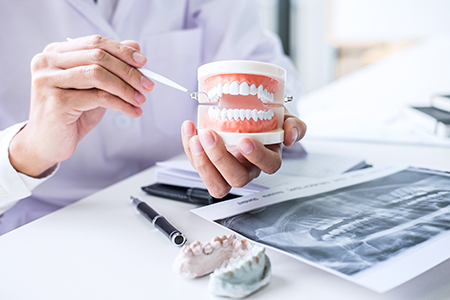
Creating a denture is a stepwise process that blends clinical judgment with precise laboratory work. After a thorough oral exam and any needed imaging, we review your goals and map out a plan. If extractions or preparatory procedures are necessary, those steps are coordinated so that the site is healthy and ready for a stable prosthesis.
Impressions and bite records are taken to capture your current anatomy and jaw relationships. Using these data, the lab fabricates trial appliances that let you and the clinician test tooth position, shade, and overall bite before finalizing the denture. This try-in stage is important for achieving a natural appearance and comfortable function.
Once the final denture is completed, we make careful adjustments to ensure even contact, proper speech patterns, and a comfortable fit. In some cases a reline or minor modification is recommended after an initial adaptation period, as tissue contours change. Our goal is a prosthesis that integrates seamlessly into daily life.

Adjusting to a new denture takes time and patience. Early on, it’s common to notice increased saliva, slight changes to speech, and the need to relearn chewing patterns. Most patients adapt within days to a few weeks; practicing speech and starting with softer foods can speed the process.
Proper daily care keeps your denture looking and functioning well. Rinse after meals, brush the prosthesis with a soft brush designated for dentures, and soak overnight in water or a recommended cleaner. It’s also important to maintain oral hygiene for any remaining teeth and to keep the soft tissues healthy by gently brushing gums, tongue, and palate.
Follow-up visits are essential. At routine checkups we assess fit, check for pressure points, and examine oral tissues for any signs of irritation or change. Over time, natural remodeling of the jaw can alter how a denture fits; relines or adjustments can restore comfort and stability when needed.
Dentures can be enhanced with adhesives or with implant attachments for added retention when indicated. Your clinician will recommend the best maintenance routine and let you know when a reline or replacement would improve comfort or function.
Our team at Timberbrook Dental is dedicated to helping patients transition smoothly to prosthetic teeth and to supporting long-term oral health. If you’d like to learn more about the denture options we offer or what to expect in your specific situation, please contact our office for additional information.
Dentures are removable prosthetic appliances that replace missing teeth and the surrounding gum tissue, consisting of artificial teeth set into a gum-colored base. They restore chewing function, help support facial contours, and assist with speech when natural teeth are absent. Dentures can be designed as full or partial appliances depending on how many teeth remain.
People who may need dentures include those with multiple nonrestorable teeth, edentulous arches, or situations where removable restoration is the most conservative option. A clinical evaluation considers remaining teeth, gum health, jawbone condition, and overall medical history to determine whether a denture is appropriate. The goal is to restore function and appearance while protecting long-term oral health.
The main categories of dentures are complete (full) dentures, which replace all teeth in an upper or lower arch, and partial dentures, which fill gaps when some natural teeth remain. Within these categories there are variations such as immediate dentures placed at the time of extraction, removable partial frameworks made from metal or flexible resin, and overdentures that fit over retained roots or implants.
Materials and designs vary to balance strength, aesthetics, and comfort, with contemporary options offering lifelike tooth shapes and gum coloration. Your clinician will review retention needs, tissue health, and aesthetic goals to recommend the best type and material for your mouth. In many cases, implant-retained designs are offered as a hybrid approach to improve stability.
Modern dentures use advanced acrylics, composite teeth, and precise fabrication techniques to mimic the color, translucency, and contours of natural teeth and gums. Digital planning, accurate impressions, and laboratory try-ins allow clinicians to fine-tune tooth position, bite relationships, and facial support before the final appliance is processed. Attention to these details helps produce a denture that looks harmonious with the patient's facial features.
Function is optimized through balanced occlusion, careful adjustment of vertical dimension, and selection of appropriate tooth forms for chewing efficiency. Removability permits thorough cleaning and straightforward adjustments or relines as tissues change, which helps maintain comfort and function over time. Properly fabricated dentures should allow clear speech, efficient chewing, and a natural appearance.
Your denture journey begins with a comprehensive exam that may include dental imaging, discussion of goals, and review of health history to create a personalized plan. Impressions and bite records are taken, and laboratory trial dentures are used to verify tooth position, shade, and function before the final prosthesis is processed. If extractions or preparatory treatment are necessary, those steps are coordinated to promote a healthy foundation for the denture.
After delivery the appliance is adjusted for fit, speech, and bite, and follow-up visits are scheduled to address pressure points and to perform any required relines. Dr. Parita Patel and the clinical team prioritize patient education during this process, showing proper insertion, removal, and daily care techniques. Ongoing checkups help preserve comfort and support long-term oral health.
Immediate dentures are fabricated in advance and placed at the time of tooth extraction so the patient does not experience a period without teeth, while conventional dentures are made after extraction sites heal and tissues stabilize. Immediate dentures provide immediate aesthetics but typically require relines or adjustments as the gums and bone remodel during healing. Conventional dentures are delivered after healing and often fit more predictably without the same degree of postoperative modification.
Both options have clinical indications depending on the patient's needs, timeline, and oral condition, and your clinician will explain the expected course following extractions. Immediate dentures can be an excellent transitional solution when appropriate, but patients should expect follow-up appointments for adjustments. Choosing between them depends on tissue health, treatment goals, and the planned timing of restorative care.
Dental implants can significantly enhance denture retention and chewing efficiency by providing secure anchor points for overdentures or implant-supported prostheses. Attachments such as locators, bars, or precision fittings connect the denture to implants, reducing movement and improving confidence during eating and speaking. Implant-retained dentures also transmit functional forces to the jawbone, which can help slow bone loss compared with unsupported removable appliances.
Not all patients are candidates for implants; an evaluation of bone volume, medical history, and oral health is necessary to determine suitability. When implants are feasible, a staged treatment plan is developed that coordinates implant placement, healing time, and final prosthetic fabrication. The result is often a more stable and comfortable denture experience that many patients find transformative for daily function.
Adapting to new dentures commonly takes days to a few weeks as the mouth adjusts to the appliance, with variations depending on the individual and the type of denture. Early experiences may include increased saliva production, minor speech changes, and the need to relearn chewing patterns, particularly when transitioning from natural teeth to a removable prosthesis. Practicing pronunciation, starting with soft foods, and wearing the denture for gradually increasing periods can speed adaptation.
Persistent soreness, sharp pain, or areas of pressure that do not improve after a few adjustments warrant a follow-up visit so the clinician can identify and relieve trouble spots. Regular checkups in the first few months allow for relines or minor modifications to improve comfort. If difficulties continue, alternative retention strategies such as implant support can be discussed to enhance stability.
Daily denture care includes rinsing the appliance after meals to remove loose food debris, brushing it gently with a soft brush designed for dentures, and soaking it overnight in water or a recommended denture cleaner. Avoid using hot water, abrasive household cleaners, or stiff brushes that can damage the denture surface, and never place dentures in a boiling solution. Removing the denture at night relieves tissues and gives the gums a chance to recover.
Maintain oral hygiene for any remaining natural teeth and soft tissues by gently brushing gums, tongue, and palate to reduce plaque and irritation. If your denture attaches to implants, clean around abutments and attachment components carefully to prevent inflammation. Schedule routine dental visits so fit, function, and oral tissues can be evaluated and maintained over time.
Relines are indicated when the denture still functions but the fit becomes loose due to natural jawbone and tissue changes, while repairs are needed for cracks, broken teeth, or damage to the base that affects function. Over time tooth wear, staining, or loss of structural integrity can make a denture less effective, and a rebase or full replacement may be recommended to restore proper occlusion and appearance. Regular checkups allow the clinician to monitor fit and detect minor problems before they become major issues.
Signs that a denture needs attention include persistent looseness, sore spots that do not resolve after adjustments, changes in speech that indicate instability, or visible damage to the appliance. Promptly contacting the dental office for evaluation helps prevent tissue irritation and restores comfortable function. The treatment plan for relines, repairs, or replacements is based on clinical findings and the long-term goals for oral health.
Candidacy for dentures depends on several clinical factors, including the number and condition of remaining teeth, gum and bone health, the presence of oral infection, and overall medical status. The dentist will assess jaw relationships, bite forces, and tissue contours to determine whether a removable prosthesis is appropriate or if alternative solutions such as implant-supported restorations are preferable. Patient goals, manual dexterity, and expectations for maintenance also play a role in planning treatment.
A thorough consultation includes examination, imaging when needed, and a discussion of advantages and limitations so you can make an informed decision. If dentures are recommended, your clinician will explain the anticipated timeline, care requirements, and follow-up schedule to support long-term success. Personalized planning helps ensure the chosen solution meets functional and aesthetic needs while protecting oral health.
Quick Links
Contact Us
